


Will Roche's precedent push the regulatory community to create standards that will level the playing field for all contenders?

Will Roche's precedent push the regulatory community to create standards that will level the playing field for all contenders?
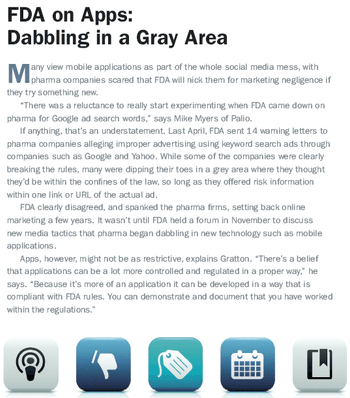
The new world of mobile applications is sparking creative platforms for reaching consumers and physicians.
As 2009 gets started and a new president takes office, the Biopharma industry is left wondering if Obama will be a friend or foe when it comes to healthcare information technology.

Here's how to search for meaning through unstructured data.
The Johnson & Johnson subsidiary launched an unbranded support group page on social networking site Facebook giving moms of kids with ADHD a place to learn, but not a place to converse.
Johnson & Johnson launched its healthcare video channel on Google?s YouTube, signaling pharma?s further entrenchment into the online community
Rather than wait to see which ePedigree legislation becomes law, biotech firm Genzyme has taken the initiative and implemented an electronic track-and-trace program to clamp down on fake meds.
The Hershey Center for Applied Research is bringing social networking to researchers and academics with a new platform that could become a Facebook for the life science community. Does the site, dubbed KnowledgeMesh, have what it takes cut through the Web 2.0 clutter? Pharm Exec takes a closer look.
Still hoping the journal article on your drug's adverse reactions will go unnoticed? Think again. A new partnership between medical journals and physician social networking site Sermo just made chatting about drugs a lot easier.

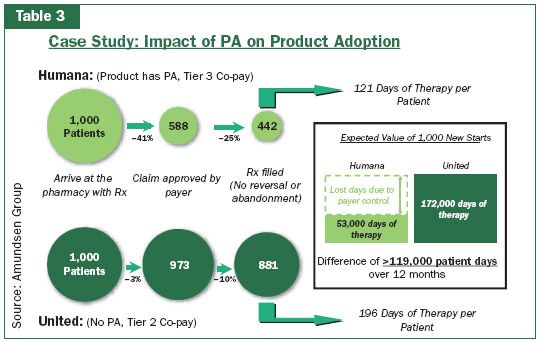
Pharmacoactuarial analysis helps drug companies communicate value to health plans
Bill Gates and Co. officially released Office for Business Applications (OBA) for the life sciences industry. This set of tools allows software developers to build applications that seamlessly connect back-end enterprise systems with MS Office programs.
GSK, Pfizer, and Merck have jumped on the cell-phone marketing bandwagon, but most of pharma is still tiptoeing around the technology. A new report details how pharma can get consumers to text for health info.
California's plan for full-blown ePedigree implementation by 2009 just got a reality check. The hang-up? The systems are cost more and are taking longer than expected to get up and running.

Defending your brand through search optimization

Electronic pedigree is the future of supply chain security. Those still waiting and seeing might what to stop waiting and start tracking
Novartis and Cadient served up a very successful unbranded campaign on YouTube. Pharma should take note of this Web 2.0 victory.
Pfizer named first pharmaceutical sponsor of social-networking community custom tailored for physicians and healthcare providers. Sermo CEO Daniel Palestrant explains how the deal will work.
New search engine gives consumers the ability to manage all their health needs from a central location--and offers pharma the opportunity to reach new patients through targeted search ads

The clinical trials space these days is an alphabet soup of technologies: CTMS (clinical trial management systems); CDM (clinical data management); CDR (clinical data repositories); eCTD (electronic common technical document); and many more. But the technology with the most promise for transforming the way clinical trials are performed (and for driving everyone mad throughout implementation) is EDC-electronic data capture. It's taken more than a decade, but today most big pharma companies-and a fair number of smaller ones-are using some form of EDC in clinical trials. The early adopters might have experienced some growing pains, but the benefits seem to be outweighing the high cost of implementation. Few companies would consider going back to paper-based trials.
Gotcha, Big Pharma! Sort of.... Not me, a guy named Jeffrey Light. The young founder and head of tiny DC-based nonprofit Patients not Patents hit the wires recently, charging that Abbott Laboratories had edited its entry in Wikipedia, the online everybody-can-play encyclopedia, trying to make itself look better. Using a brand-new online tool called the Wiki Scanner, which allows anyone to track the source of any change entered into any of Wikipedia's 2 million articles, Light discovered that at 4:38 P.M. on July 2, 2007, several edits to the article on Abbott were made from a computer at Abbott's Chicago office.

If you've been thinking of online video as a toy or, worse yet, as something that's going to happen at some point in the future, let me offer you a picture: Me, a target pharma customer, on the elliptical machine at the gym, watching, no, not CNN or Katie Couric, but "Nephrology Consult 101, Unusual Causes of Renal Failure" and "Internal Jugular Central Line Placement," a pair of free video podcasts I downloaded from the Yale School of Medicine.
Search engine giant says industry lags behind on e-marketing
Pfizer computers infiltrated by spammers
Two Internet superpowers are invading online consumer-health territory. What does it mean for pharma?