In today’s Pharmaceutical Executive Daily, the FDA grants accelerated approval to INOVIO’s Voceryq to reduce the frequency of surgery in adults with recurrent respiratory papillomatosis, Brox.AI’s Hamish Brocklebank speaks with Pharmaceutical Executive on the three levels of digital clone use cases reshaping pharma research, and CytoDyn’s Dr. Jay Lalezari discusses his path from HIV clinician to CEO.
FDA granted accelerated approval to INOVIO’s Voceryq, a DNA medicine immunotherapy, to reduce the frequency of surgery in adults with recurrent respiratory papillomatosis. In the RRP-001 study, seven of 26 efficacy-evaluable patients, who averaged 4.5 surgical excisions in the prior year, achieved a complete response requiring no surgery after 12 months. INOVIO president and CEO Jacqueline Shea says the company expects to make Voceryq available to order within approximately 60 days.
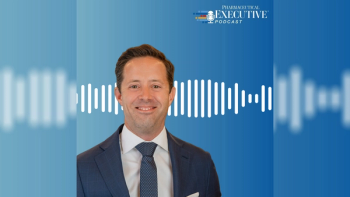
Brox.AI co-founder and CEO Hamish Brocklebank explains why his company retired the term “digital twin” in favor of “digital clones,” distinguishing one-to-one models built from consenting real individuals from purely synthetic AI personas. He outlines three levels of use cases, from rapid HCP website A/B testing to predicting physician prescribing behavior after a hypothetical FDA approval, emphasizing that every clone in Brox.AI’s panels is grounded in real, compensated participants under a triple opt-in consent model.
Finally, CytoDyn CEO and CMO Dr. Jay Lalezari discusses his transition from decades as a front-line HIV clinician to running a company, calling it “very strange” while he continues to juggle both roles. He traces Leronlimab’s expansion from HIV to Covid-19 to CCR5-positive solid tumor oncology not to a deliberate plan, but to the receptor’s recurring role across disease areas, saying the company is “chasing the CCR-5 data in science.”