





Regulatory
about 19 hours ago
Everything to Know About TrumpRx in 20261 day ago
TrumpRx Is Live and ComplicatedLatest Content









Advertisement
Shorts

0:44
The Rise of Specialty Pharma
2 days ago
by
Nicholas Jacobus(+1 more)

0:45
How AI is Revolutionizing Life-Saving Drug Discovery
5 days ago
by
Nicholas Jacobus(+1 more)
1:01
JP Morgan 2026: Funding is Freeing Up––Why the Market is Picking Back Up
8 days ago
by
Mike Hollan(+1 more)
0:40
GLP-1 Pricing Traps That Make You Quit
11 days ago
by
Mike Hollan(+1 more)
0:45
AI's Impact on Society
15 days ago
by
Nicholas Jacobus(+1 more)
0:56
Orals vs. Injectors - The Future of Weight Loss Maintenance
19 days ago
by
Mike Hollan(+1 more)
0:49
The Five Elements of AI Success in Large Enterprises
23 days ago
by
Nicholas Jacobus(+1 more)
0:56
Leaving Pharma for AI
24 days ago
by
Nicholas Jacobus(+1 more)
0:48
Biotech IPO Window: Will Enthusiasm Return in 2026
a month ago
by
Mike Hollan(+1 more)
1:05
Why Clinical Trials Fail and How to Fix Them
a month ago
by
Mike Hollan(+1 more)
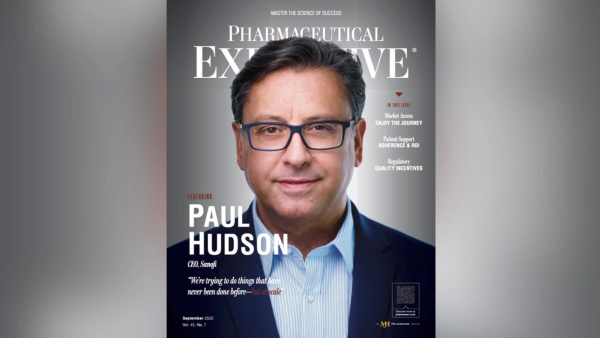
Paul Hudson: A Mindset for Miracles
With healthcare at a key crossroads of policy, technology, and science, Sanofi CEO Paul Hudson shares the Big Pharma’s formula for navigating the new age of innovation, where running from risk is not an option.

Pharmaceutical Executive: September 2025 Issue (PDF)
Click the title above for a link to open the Pharmaceutical Executive September 2025 issue in an interactive PDF format.
Coaching Flag Football—And Guiding a Biotech Through Commercialization
Useful tips and parallels for staying in the game following a complete response letter.

From Lab to Market: Tracking Today’s Shifting Pathways for Biotech
Outlining the key touchpoints for embracing change and opportunity in the “messy, tough—and fun” R&D-to-commercial transition journey.

Podcasts
Videos









All News
Advertisement
Advertisement

The site offers users coupons for a limited number of medications that can be redeemed at pharmacies and/or manufacturer DTC sites.
In today’s Pharmaceutical Executive Daily, FDA approves Vybrique for erectile dysfunction, experts argue Phase III clinical protocols should be treated as product launch blueprints, and Veradermics completes an upsized $256 million IPO.

By giving small and mid-size biotechs access to real-world data and advanced analytics once reserved for large pharma, AI platforms are leveling the playing field by enabling lean teams to de-risk clinical strategy, strengthen fundraising narratives, and make faster, more confident decisions across the development lifecycle.
The approval is for a new formulation of the medication that allows for it be provided as an oral film.

Veradermics’ above-range IPO highlights renewed investor selectivity in biotech, favoring late-stage companies with clear clinical milestones and exposure to large, consumer-driven markets.
In today’s Pharmaceutical Executive Daily, Susan G. Komen releases its 2026 breast cancer progress outlook, industry leaders explore how pharma can tap into emerging talent hubs, and Novartis’ Q4 results highlight mounting pressure from its upcoming patent cliff.

Novo Nordisk posted strong 2025 sales growth driven by obesity treatments and U.S. market performance, but tempered operating profits signal a more cautious outlook for 2026.
Novartis reported solid full-year growth and margin expansion in 2025, but also set the stage for a challenging year ahead marked by major patent expirations.

The outlook highlights major progress in reducing U.S. breast cancer deaths through improved screening and treatment, while noting that rising incidence and ongoing disparities continue to challenge patients and the health care system.
In today’s Pharmaceutical Executive Daily, a new a is expected to evolve in 2026, the FDA rejects AstraZeneca’s application for a subcutaneous indication of Saphnelo, and SanegeneBio enters a $1 billion global licensing agreement with Genentech focused on RNAi development.
Advertisement

Dave Carey, CEO, Preceptis Medical and Michael Monovoukas, CEO, co-founder, AcuityMD note the importance of shifting ear tube procedures into the office, reducing anesthesia risk, and how AI-driven data and adaptive commercial strategies are becoming critical to scaling new medtech innovations.

The report details expectations regarding follow-up communications and materials.

FDA’s complete response letter for subcutaneous Saphnelo highlights regulatory scrutiny around manufacturing and formulation changes in the industry.

The deal highlights how RNAi is moving into a more industrial phase of drug development, as large pharmaceutical companies look to pair advanced delivery technologies with the scale and durability

Angela Schwab, CEO at Trialynx, continues her conversation with Pharmaceutical Executive, this time detailing her experience with debuting her company at the conference.