
A second payment has now been made under the UK’s Pharmaceutical Price Regulation Scheme (PPRS).
A second payment has now been made under the UK’s Pharmaceutical Price Regulation Scheme (PPRS).
Up until a few months ago, there was little industry interest or public support for developing vaccines and treatments to combat the Ebola virus.
Pharmacovigilance controls are becoming firmly embedded in the European Union’s post-authorization regulatory system, with the European Medicines Agency (EMA) acting as the pivot for an EU-wide network of agencies monitoring medicines throughout their market lifespan.
The European Federation of Pharmaceutical Industries and Associations’ new medicines verification system will put an end to the re-sale of stolen and counterfeit drugs in the European supply chain, the organisation claims.
Early-stage and mid-size bio/pharmaceutical companies have enjoyed an embarrassment of riches over the past 18 months.
The Chinese market is attractive to foreign investors for many reasons. It is the world’s third largest market for pharmaceuticals with annual sale of US$71 billion.
The role of medical affairs is taking on greater importance, as relationships between life sciences companies and external stakeholders become more complicated.
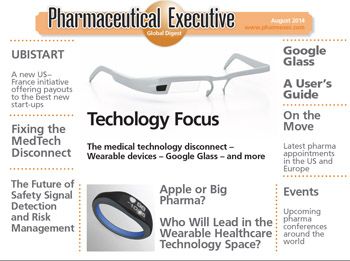
PEGD0814In this special Technology Issue of Pharm Exec Global Digest: Apple or Big Pharma: Who Will Lead in the Wearable Healthcare Device Space?; Google Glass - a Healthcare User’s Guide; UBISTART’s New Payout for Innovative Start-ups; and more… Click here to read the issue.
With drug-development efforts in Alzheimer’s disease continuing to produce underwhelming results-as clinicians have long battled the inherent diagnosis and translational research challenges associated with the disorder-it’s no secret that there is increased clinical focus now on the prevention and early detection of Alzheimer’s. Those were two areas of emphasis at the recent Alzheimer’s Association International Conference (AAIC) in Denmark. In fact, data presented at the event that reported a decline in incidence of dementia in the U.S. and Europe seems to indicate that reducing the risk of Alzheimer’s and even preventing the disease may be possible. Critical to those pursuits, however, will be future learnings generated from the growing recognition that treatment approaches in Alzheimer’s should target multiple pathologies. Joyce Suhy, Ph.D., VP of neuroscience at BioClinica Inc., a provider of medical imaging solutions for clinical trials, says that people who get dementia usually have mixed pathologies, whether it’s Alzheimer’s, Lewy body dementia, for example, or other similar neurodegenerative conditions. As evidence that researchers are focusing more on multiple pathologies, Suhy cites the recent collaboration struck between the Michael J. Fox Foundation for Parkinson’s Research and the Alzheimer’s Association and the W. Garfield Weston Foundation around studying the links between the Parkinson’s and Alzheimer’s patient populations, with the hopes of reshaping future treatment targets. For Alzheimer’s, specifically, Suhy and her team at BioClinica are focused on helping drugmakers determine whether patients in clinical trials targeting the build-up of amyloid plaque in the brain-considered a crucial factor in the onset of disease-actually have that pathological feature. Most of the notable prevention trials underway are testing drugs that target amyloid. In addition, Novartis recently partnered with Banner Alzheimer’s Institute (BAI) on a clinical study that will determine whether two Novartis experimental anti-amyloid drugs can prevent or delay the emergence of Alzheimer’s symptoms. Advanced molecular imaging techniques can aid in these efforts by ensuring a patient’s pathology is matched appropriately. Further, they provide clinical investigators with sophisticated tools to monitor Alzheimer’s in their studies. Suhy chaired a session on neuroimaging at AAIC, where BioClinica team members presented recent clinical trial progress using amyloid PET screening for enrichment of patient recruitment for early-stage Alzheimer’s. She notes that advances over the past decade in amyloid phenotyping, whether through PET scans or imaging of cerebrospinal fluid (CSF) flow, have helped to better target enrollment in Alzheimer’s trials, particularly as researchers are increasingly studying subjects with more prodromal and milder cognitive impairment. In its presentation, BioClinica reported higher amyloid-negative rates due to the inclusion of earlier-stage patients, when compared to historical trials, which focused more predominately on the mild-to-moderate Alzheimer’s population. “As we’re moving towards earlier screening for enrolling patients into Alzheimer’s disease trials, we find an increasing rate of patients that are amyloid-negative,” says Suhy. “Many of these patients may never advance to mild-to-moderate Alzheimer’s.” Uncovering these earlier clues can be valuable for drug developers when recruiting patients for Alzheimer’s treatment trials targeting amyloid. In past studies, otherwise qualified individuals-who turns out didn’t have amyloid clusters in their brains-were often enrolled, adding significant noise to those trials. The challenge, Suhy says, is that these subjects typically meet the various clinical criteria for the study protocol, such as memory or cognitive decline, and, therefore, are considered good candidates for enrollment. They often progress smoothly through the screening process, and only when getting a PET scan at the end is it discovered they are amyloid-negative. “If a patient doesn’t present with amyloid in the brain, then a drug targeting amyloid will not be effective,” says Suhy. “In other words, the drug target must be present in order for a drug to work. Hence, the current and important initiatives for screening clinical trial patients using molecular imaging like PET or CSF analysis to verify the presence of pathology and enroll appropriate patients for a trial.” Suhy points out that there are several ways to enrich Alzheimer’s patient populations to increase the chances of a successful trial. Besides PET or CSF imaging, some studies are looking at genotype ApoE 2, for example. “By identifying patients earlier in the course of disease, clinicians can maximize their ability to treat and ultimately help patients,” she says. “A key aspect to this is the identification and selection of the right patients.” Key takeaways AAIC, held in Copenhagen, Denmark’s capital city, featured more than 150 data unveilings in Alzheimer’s R&D. One particular notable development, according to Suhy, is the continued promise of tau PET tracers. Tau neurofibrillary tangles, like amyloid, represent one of the hallmark pathologic signs of Alzheimer’s. Though still early in testing, it is thought that tau is more closely linked to memory decline than amyloid, and, therefore, tau imaging-and the development of ligands for early detection of Alzheimer’s risk-may eventually be a better tool for determining cognitive impairment than amyloid imaging. Another takeaway for Suhy was the release of Phase II results for Genentech drug crenezumab, a monoclonal antibody that target all forms of amyloid beta. Though crenezumab did not meet its primary endpoints for cognition and function, a secondary analysis showed promising cognition effects in the milder Alzheimer’s patient cohort when taken at a higher dose. Suhy believes this data further reinforces the importance of early screening of disease risk.

German drugmaker Merck KGaA has begun the second year of its five-year project to provide diabetes management courses for medical and pharmacy students in African Universities.
Three companies were crowned the Nordic region’s “shining examples of innovative life science companies” in Stockholm, Sweden, this week.
As the “Saga of Sovaldi” continues to unfold in the U.S., and Congress, insurers, providers, and the U.S. Rx manufacturer, Gilead, hurl charges back and forth at each other, it’s pretty clear the situation will only continue to deteriorate.
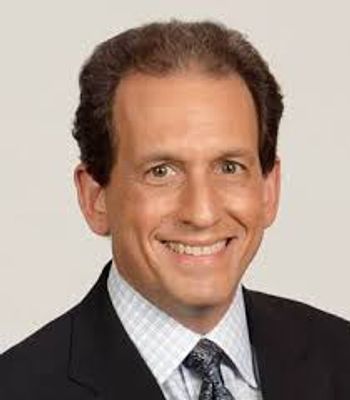
David Schlanger became WebMD’s CEO in August of 2013, but first joined the company in 1995, after serving as executive director, business development at Merck.
Only a year ago, hopes were high of rapid progress towards a transatlantic trade deal that would boost the European and US economies - and ease conditions for drug firms on both sides of the ocean.

Pharmaceutical professionals, teams, and organizations can succeed at an elite level by tackling the tough mental challenges of Navy SEAL training, writes Stan Bernard.
EuropaBio, the European Association for Bioindustries, has announced its “top five biotech SMEs in Europe”.
Earlier this year, the newly approved EU Clinical Trials regulation (No 536/2014) was published in the Official Journal of the EU (OJEU).
Initial human testing on a vaccine to prevent Ebola virus co-developed by the National Institute of Allergy and Infectious Diseases (NIAID), part of the National Institutes of Health (NIH), and GlaxoSmithKline (GSK) has begun.
The storms raging across Europe-and beyond-over the pricing of new hepatitis C treatments have been intensified by the European Union’s approval last week of the latest directly-acting antiviral, Bristol-Myers Squibb’s Daklinza (daclatasvir).
The English Cancer Drugs Fund (CDF), set up to provide funding for those products that the National Institute for Health and Care Excellence (NICE) has not recommended for use or where their guidance isn’t yet available, remains controversial.
Generic drugs save patients and European healthcare systems approximately EUR 35 billion (US$46bn) each year, according to the European Generics Association (EGA).

The role of pharma medical affairs teams is taking on greater importance in the value chain.
June 2014 BPA Brand Report

Defining the critical coaching steps necessary for top managers to realize their potential in an industry undergoing significant restructuring of human and financial capital.
Pharma hopes for a deal are fading as the once-hot TTIP talks seem to be on the fizzle in Europe.
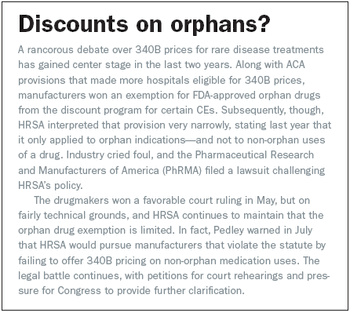
Expansion of drug discount program ignites lawsuits, policy disputes.
Immunovaccine Inc., a clinical stage vaccine company, announced on Aug. 25 positive results for a vaccine formulated in its DepoVax technology in an Ebola virus challenge study performed by the National Institute of Allergy and Infectious Diseases (NIAID) of the NIH.
It is a tragic truism to remark that the merits of the pharma sector are most sharply perceived only at times of deep human suffering.
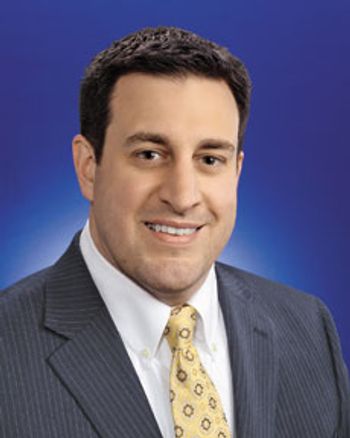
Michael Injaychock joined Eli Lilly in 2007 after five years in a Washington-based financial services consulting role and a subsequent MBA from the University of North Carolina.
An international group of three scientists are the recipients of United States Pharmacopeial Convention’s 2014–2015 Global Fellowship Awards, aimed at advancing research involving quality standards for medicines.