
Companies are poised to speed up investments in electronic data capture.
Companies are poised to speed up investments in electronic data capture.
Senate report suggests drug makers have too much influence on CME content.
Allergan launches celebrity campaign for Botox and Juvederm.
The top 50 pharmaceutical companies, ranked by prescription pharmaceutical drug sales, plus rankings of top products, R&D spend, and more.

In march, us rep. rahm "Mr. Television" Emanuel (D-IL) reintroduced legislation aimed at what he calls "driving down the price of prescription drugs." But the only thing such legislation would accomplish would be the "driving down" of pharmaceutical innovation.


Pharma industry alliances are increasingly critical to success. They are gaining on R&D in terms of importance, especially since many companies are falling short in their internal pipelines and need to look outside for promising compounds. Today, nearly two-thirds of the top 20 pharma and biotech companies have established alliance-management functions. These usually cover deals in the discovery, development, and marketing space.

The push is on to establish an approval pathway for generic versions of biotech therapies. The Hatch-Waxman Act of 1984 established a process whereby generic-drug manufacturers could obtain approval for a product based on the innovator company's data. But Hatch-Waxman doesn't apply to biologics regulated by the Public Health Service Act, and generics makers-as well as some Big Pharma companies and small biotech firms-want Congress to give the Food and Drug Administration authority to set up a similar process for these products as well.

It's not always obvious just who is reponsible for the various steps of pharmacovigilance.

Over the past 20 years, drug companies went from having carte blanche to set drug prices to operating in an ever more tightly controlled environment. Instead of doctors calling the shots, government and private payers are becoming increasingly vocal about which drugs they will and will not cover. Frustrated patients, in turn, are getting anxious about their out-of-pocket costs and access to the medicines they need.
With legislation pending in Congress, generics makers begin investments in follow-on protein drugs.
PharmRep Subscriber Kit
Class action suits across the country challenge firms to pay overtime.
Promising drugs failed to deliver at this year's American College of Cardiology meeting.
High-profile, quick-growing IBS drug shelved because of cardio risks.
New technology could revolutionize meningitis strategy in the developing world.
PHARM EXEC ASIA PACIFIC MEDIA KIT

If the uk's office of fair trading (OFT) is to be believed, Brits are overpaying for their medicines to the tune of ?500 million a year. That's the conclusion the OFT came to in its long-awaited report on the Pharmaceutical Pricing Regulation Scheme (PPRS), the arcane method by which drug prices are set in the United Kingdom.
Value-based medicine is tremendously helpful if you've got a good drug. It could guide R&D, price decisions, and marketing. But most companies don't have all the clear winners.

There are whistleblowers who bring wrongdoing to light. But there are also whistleblowers whose main complaint is "I should have won." FDA seems to suffer from a serious oversupply of the second sort.
All the hoopla about Medicare drug prices is overshadowing the real action in pharmaceutical pricing: a less-noticed exercise that aims to reduce reimbursement for medicines purchased by state Medicaid programs. Retail pharmacists say the proposed changes will put them out of business, and pharmacy benefit managers (PBMs) fear an end to discount negotiations.
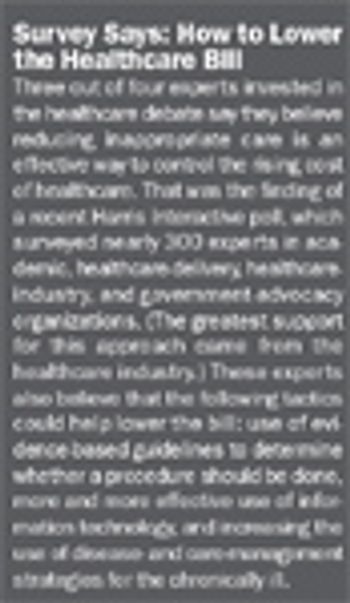
Inappropriate care may account for 25 to 30 percent of the US healthcare bill. Former NEJM editor Arnold Relman used to write that if we could eliminate the unnecessary care, we could save enough to insure all the uninsured.
Changing nature of disease, market pressures shape how companies communicate about HIV drugs.
PE Pharma Invitational invite
Costs of pediatric clinical trials are on the rise -- but companies forge ahead.
No surprises here: Medicare, emerging markets boost drug sales--but mostly generics.
Merger with Organon strengthens late-stage pipeline.
A second state is looking to hold down drug costs by going after data collectors.
Drug giant streamlines professional advertising but remains coy about sales force headcount.
Swiss drug maker gears up to launch first in class Tekturna.