


Europe's fiscal crisis is becoming a new rallying cry for patient groups-but regional unity is still elusive.

Europe's fiscal crisis is becoming a new rallying cry for patient groups-but regional unity is still elusive.
After a series of government reforms that are appealing to both domestic and foreign players, the Japanese pharmaceutical market is making a comeback, writes Jane Wan.

Germany has shifted from relative pricing freedom to a market that is sensitive and influenced by cost-containment policies. But pharma is pressuring the country to change its policy again.

Ashish Goel and Ramesh Chougule look at six areas where pharma should consider reinventing its supply chain processes and systems to best exploit emerging market opportunities.

Over ten years ago, the economic concept of the 'BRIC' countries-Brazil, Russia, India and China-was formed, and it's pretty much all we've heard about ever since. Yet earlier this year, the very same man who coined the term-Jim O'Neill, chief economist at Goldman Sachs-declared that by 2020 Mexico would be the seventh largest economy in the world, surpassing both India and Russia. Mexico belongs to one of four recently defined 'growth markets' alongside Indonesia, South Korea and Turkey. That certainly shakes things up a little for both outside observers and active local stakeholders in the economy.
It's good to look to other industries such as FMCG - and to products such as Pepsi and Horlicks - for lessons in emerging market success, writes Nick Stephens.

Will changes to the P&R system in the UK finally put some real metrics behind the elusive concept of value?

In just the past few years, South Africa has hit several key economic benchmarks demonstrating the country's upward trajectory.

Pharma companies entering the emerging markets are under pressure to offer a convincing Corporate Value Proposition (CVP).

Pharm Exec talks to Carlos Plata, Chief Scientific Officer of Esteve, the Spanish company that is rising above the economic gloom to become a major player in pain.

What does a Scottish vote for independence mean for Big Pharma investment and healthcare funding and delivery in the UK?
India's most prominent scientist, Dr R.A. Mashelkar, President of the Global Research Alliance, on delivering medicines profitably but cheaply to low income countries.
Despite the severe blow to its economy, Ukraine has been recovering at a faster rate than its Western European counterparts

Manufacturers, wholesalers, pharmacists and even parallel importers are uniting under a common blanket, writes Reflector.

With growth as its guiding light, Novartis has big plans for the emerging markets. Pharm Exec sits down with CEO Joe Jimenez to understand what it will take the company to best the competition.
After his predecessor and countryman left the EMA in disgrace, Guido Rasi jumps in as executive director-with great challenges ahead.
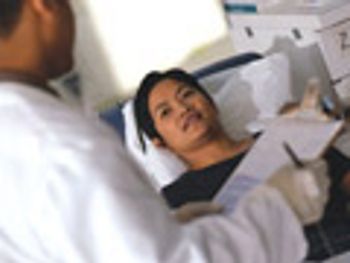
Simon Estcourt assesses how the regulatory landscape for managed access programs is evolving, particularly in the UK.
China's healthcare reforms are generating uncertainty for its domestic pharmaceutical market, writes Jon Zifferblatt.

Guido Rasi, the European Medicine Association's new executive director, faces many challenges, says Reflector, not least shaking off the legacy of his early predecessor, Duilio Poggiolini.

With the $12-billion valued Indian pharma industry expected to grow at a CAGR of 16%, the Indian government plans to capitalize on the growth potential in an effort to beat the competition.

Brazil's clinical trial research is the country's backbone.

Brazil was the last country to enter the fiscal crisis, but also the first to exit. And with a burgeoning middle class and a staunch commitment to national development, its pharmaceutical future is now.

Brazilian industry is learning to spread its pharma manufacturing around more.
Astellas makes its presence felt in Brazil.
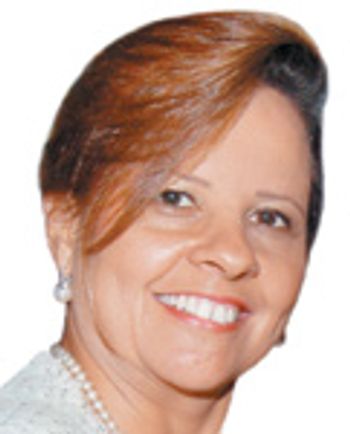
French-based Besins is a relatively new entrant to the Brazilian pharma market.