

Critics proclaim that recent RWD guidance issued by FDA still has a good number of gaps to fill and may take some time to accomplish.
Critics proclaim that recent RWD guidance issued by FDA still has a good number of gaps to fill and may take some time to accomplish.

Practices to ensure accuracy in selected datasets.

The MIT Institute for Work and Employment Research’s Dr. Thomas Kochan offers three key insights on engaging with AI and other digital solutions as they continue to transform the working environment.

Comprehensive dosage monitoring of topical treatments for mild to moderate psoriasis.

According to new research, quality has overtaken cost as a priority in plans for automating adverse event reporting. John Price reveals the drivers and barriers to change.
Healthcare professionals (HCPs) shouldn’t miss out on critical information while their focus is on their patients, which is why messages on professional platforms are an essential resource to improve a patient’s health results, writes Gareth Shaw.

How can pharma create solutions that are effective, can provide long-term value, and will actually be adopted by HCPs and patients?

Industry leaders share perspectives on moving the life sciences industry forward.

Traditionally difficult in pharma, data science recruitment witnessed a sharp drop-off at the beginning of the pandemic, but interest has since bounced back to unexpected levels.
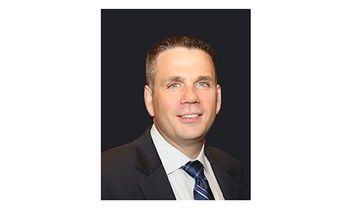
Chris Doerr, Senior Vice President, Global Generic Sourcing, AmerisourceBergen, talks about the importance of companies taking an honest view of their current-state capabilities when embarking on the digital transformation journey.

Creating a digital diagnostic that is supplemental and strategic to a company’s therapeutic asset requires due diligence to monetize the digital health innovation, or at least ensure optionality through the product development cycle.

Clay Hausmann describes how Almirall is weeding out uncertainty to sow the seeds of data-driven digital transformation.
Unconventional collaborations between biopharma and tech are starting to take off.
While there is broad agreement that the Chief Data Officer plays a critical part in pharma, a definitive description of the role is still evolving.
How the sharing of scientific content with HCPs is shifting in an era of accelerated digitalization.

Medical science liaisons (MSL) in the pharma industry were already at their limit pre-COVID. The challenge for MSLs is to identify the most efficient way to upskill their teams and add digital competencies without overloading them.

In today‘s environment, medical science liaisons (MSLs) must call on digital solutions to make use of the right data and encourage the right conversations to take place.

”Soft skills” are notoriously difficult to teach. For that reason, many trainers are applying state-of-the-art computer simulations to help develop these skills within pharma sales organizations, writes Jeremy Lovelace.

How a large, global biopharma company is leveraging a data-linking strategy to power insight-generation tools and techniques—and supporting customers through their journey with dynamic personalization and modular content.

Leslie Rotz and Todd Parker outline four major steps in the Medical Affairs digital transformation journey.
Digital transformation in medical affairs made a sluggish start, but there is plenty to be optimistic about.

AI-enabled digital therapeutics have helped give new meaning to the term personalized medicine by tailoring not just the treatment itself, but the way that treatment is managed to the individual characteristics of each patient.

Pfizer’s Darren Feenan and Tangent90’s Jan van den Burg talk to Pharm Exec about sharing scientific content with HCPs in an era of accelerated digitalization.

The massive shift to remote work has seen pharma companies increasingly targeted by malicious actors seeking out weaker points across the business ecosystem. But with the right mix of technology and mindset, organizations can prepare against threats in the future.

Current practices leave much to be desired with increasing commercial needs.